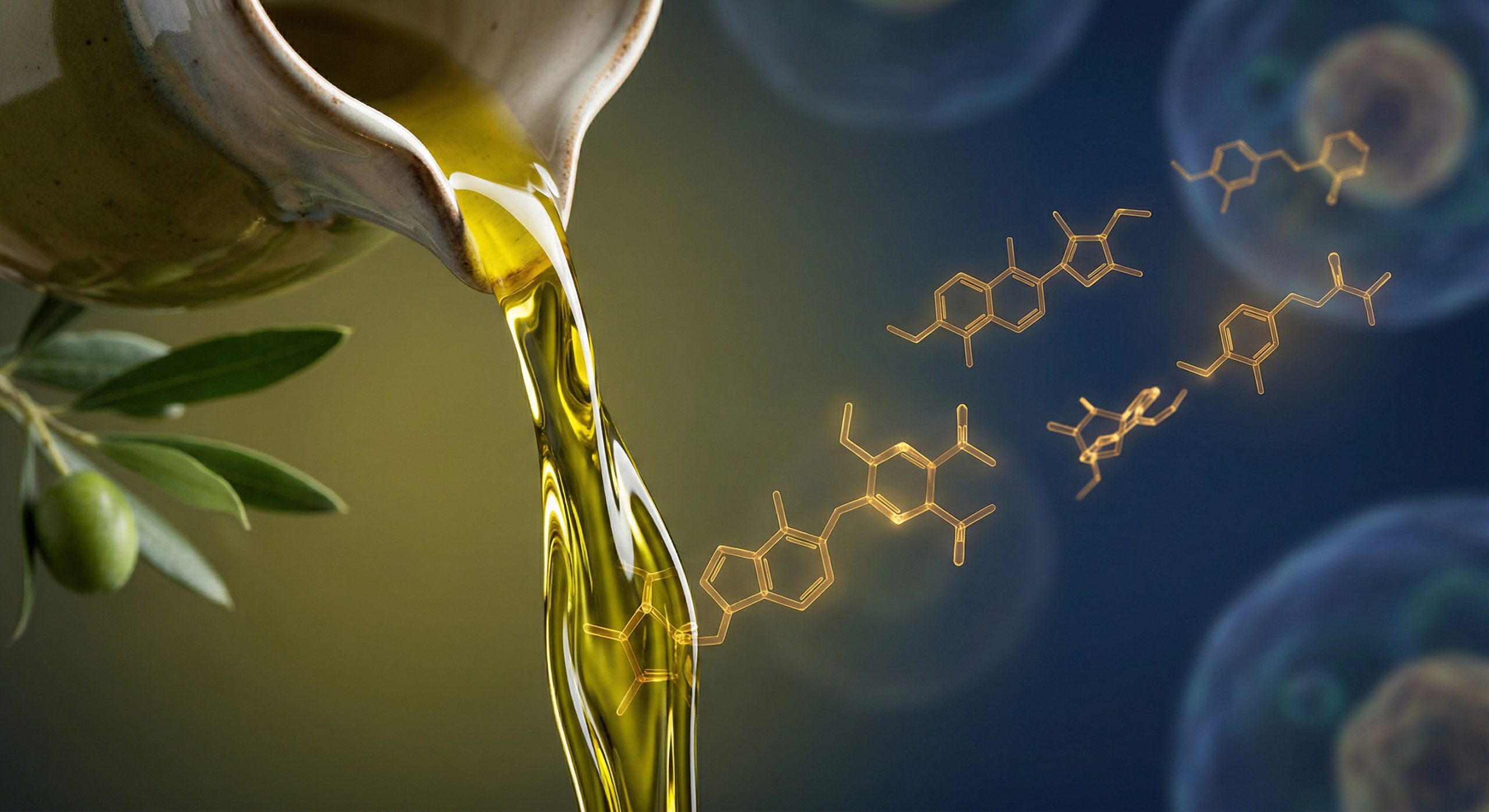
A Kitchen Staple With Pharmaceutical-Grade Power
In 2005, a research team led by Paul Breslin at the Monell Chemical Senses Center in Philadelphia made a discovery that should have changed how every household thinks about olive oil. They found that extra-virgin olive oil contains a compound called oleocanthal that acts as a natural COX-1 and COX-2 inhibitor — the exact same mechanism by which ibuprofen reduces pain and inflammation.
As Breslin stated: “Structurally it’s not similar, but pharmacologically it’s very similar.”
The finding, published in Nature (2005, Vol. 437, p. 45), demonstrated that approximately 50 millilitres (about 3.5 tablespoons) of extra-virgin olive oil per day provides an anti-inflammatory dose equivalent to a low-dose ibuprofen regimen. The difference is that olive oil delivers this effect through food rather than a pharmaceutical, without the gastrointestinal side effects, kidney risks, and cardiovascular concerns associated with long-term NSAID use.
When we published this in 2005, it was one more piece of evidence supporting a principle central to the Frequency Research Foundation’s work: the most powerful health interventions are often the simplest, and many pharmaceutical effects can be achieved through nutrition.
How Oleocanthal Works
To understand why olive oil can replace ibuprofen as a daily anti-inflammatory, you need to understand the COX enzyme pathway that both substances target.
The COX-1 and COX-2 Pathway
Cyclooxygenase enzymes — COX-1 and COX-2 — are responsible for producing prostaglandins, a family of molecules that mediate inflammation, pain, and fever. When tissue is damaged or infected, COX enzymes ramp up prostaglandin production, which triggers the swelling, redness, and pain of inflammation.
Ibuprofen works by blocking both COX-1 and COX-2, reducing prostaglandin production and thereby reducing inflammation and pain. This is effective but comes with trade-offs: COX-1 also produces prostaglandins that protect the stomach lining and support kidney function, which is why long-term ibuprofen use can cause gastrointestinal bleeding, ulcers, and kidney damage.
Oleocanthal inhibits the same COX-1 and COX-2 enzymes through a different molecular mechanism. While ibuprofen and oleocanthal are structurally unrelated — they look nothing alike at the molecular level — they produce remarkably similar pharmacological effects. The key difference is delivery: oleocanthal arrives in the body as part of a whole food matrix containing hundreds of other beneficial compounds, rather than as an isolated synthetic molecule.
The Throat Sting Test
Breslin’s team initially noticed oleocanthal because of a distinctive peppery sting that high-quality extra-virgin olive oil produces at the back of the throat. This sting, familiar to anyone who has tasted a fresh, high-quality EVOO, turns out to be caused by oleocanthal activating the same pain receptor (TRPA1) that ibuprofen stimulates in the throat. The stronger the throat sting, the higher the oleocanthal content — and the greater the anti-inflammatory potency.
This gives consumers a simple, built-in quality test: if your olive oil does not produce a peppery sting at the back of the throat, it likely has low oleocanthal content and minimal anti-inflammatory benefit.
Beyond COX Inhibition: Oleocanthal’s Full Range of Effects
Since the original 2005 Breslin study, research on oleocanthal has expanded significantly. COX inhibition turns out to be just one of several mechanisms through which this compound protects health.
Anti-Cancer Activity
Multiple laboratory studies have demonstrated that oleocanthal selectively kills cancer cells while leaving healthy cells intact. It appears to destabilize lysosomal membranes specifically in cancer cells, triggering programmed cell death. This selectivity is remarkable and distinguishes oleocanthal from most chemotherapy agents, which damage healthy cells alongside cancerous ones.
Neuroprotective Effects
Oleocanthal has been shown to enhance the clearance of amyloid beta from the brain — the toxic protein that accumulates into the characteristic plaques of Alzheimer’s disease. It does this by upregulating the production of proteins involved in amyloid transport across the blood-brain barrier, effectively helping the brain flush out the molecular debris that drives neurodegeneration.
This finding directly connects olive oil consumption to Alzheimer’s prevention through a mechanism distinct from its anti-inflammatory effects. Oleocanthal does not just reduce the inflammation that worsens Alzheimer’s — it actively helps the brain remove the toxic proteins that cause it.
Joint and Cartilage Protection
Research has shown that oleocanthal reduces the production of nitric oxide and other inflammatory mediators in cartilage cells, suggesting protective effects against osteoarthritis and other inflammatory joint conditions. For people who currently use ibuprofen for chronic joint pain, transitioning to high-oleocanthal olive oil provides similar anti-inflammatory relief with added systemic benefits rather than systemic risks.
Olive Oil and Alzheimer’s Disease
The connection between olive oil and brain health extends well beyond oleocanthal alone. Extra-virgin olive oil is a cornerstone of the Mediterranean diet, which has been consistently associated with reduced Alzheimer’s risk in large population studies.
Multiple Mechanisms of Brain Protection
Oleocanthal’s COX inhibition reduces the chronic neuroinflammation that drives Alzheimer’s progression. This is the same foundational mechanism we describe in our article Eliminating Inflammation Is a Top Priority for Disease Prevention — chronic inflammation is the common thread in virtually every major chronic disease, and olive oil provides a daily, food-based strategy for managing it.
Oleocanthal’s amyloid clearance enhancement directly addresses the hallmark pathology of Alzheimer’s — plaque accumulation. The polyphenols in extra-virgin olive oil (including hydroxytyrosol and oleuropein) provide potent antioxidant protection for neuronal cell membranes, complementing the structural protection provided by DHA from fish oil. The monounsaturated fats in olive oil support cerebrovascular health, maintaining the blood flow the brain depends on.
The Mediterranean Diet Pattern
Olive oil does not work in isolation. Its most powerful effects are observed as part of the broader Mediterranean dietary pattern that also includes regular fish consumption, moderate red wine, abundant vegetables and fruits, and minimal processed food. Each of these elements contributes anti-inflammatory and neuroprotective effects.
Our other nutritional articles cover these complementary strategies in detail. Fish consumption reduces Alzheimer’s risk by 60% and fish oil prevents Alzheimer’s disease cover the omega-3 side of neuroprotection. Red Wine Cuts Alzheimer’s Risk by 45% covers resveratrol’s complementary anti-inflammatory and amyloid-clearing effects. Together with olive oil’s oleocanthal, these nutritional strategies form a comprehensive dietary approach to Alzheimer’s prevention.
For the complete picture of how nutrition works alongside frequency therapy, infection management, and brain wave restoration, read our complete guide to Alzheimer’s disease and frequency therapy.
2025 Update: 20 Years of Oleocanthal Research
Since the Breslin study was published in 2005, oleocanthal research has grown from a single Nature paper into a substantial body of evidence spanning anti-inflammatory, anti-cancer, and neuroprotective applications.
The PREDIMED Trial
The most significant population-level evidence for olive oil’s health effects came from the PREDIMED trial (Prevención con Dieta Mediterránea), a large randomized controlled trial in Spain. Participants assigned to a Mediterranean diet supplemented with extra-virgin olive oil had significantly lower rates of cardiovascular events and, in subsequent analyses, showed better cognitive function and reduced incidence of dementia compared to controls. This was not an observational study — it was a randomized intervention, providing stronger evidence than epidemiological data alone.
Oleocanthal Content Varies Dramatically
Research has revealed that oleocanthal content varies enormously between different olive oils. Factors that affect oleocanthal content include olive variety (some cultivars produce significantly more oleocanthal than others), harvest timing (earlier harvest generally produces higher oleocanthal levels), processing method (cold-pressed, first extraction preserves more oleocanthal), and freshness (oleocanthal degrades over time, especially when exposed to heat and light).
This means that not all olive oils provide meaningful anti-inflammatory benefit. The cheap, refined, or old olive oils common on supermarket shelves may contain little to no oleocanthal.
Long-Term NSAID Risks Have Become Clearer
Since 2005, the risks of long-term NSAID use have become better documented. Chronic ibuprofen use is now clearly associated with increased risk of gastrointestinal bleeding and ulcers, kidney damage and chronic kidney disease, elevated cardiovascular risk (particularly at higher doses), and disruption of gut microbiome health. These risks make the case for food-based anti-inflammatory alternatives even stronger than when we first published this article.
Choosing the Right Olive Oil: Quality Is Everything
The anti-inflammatory benefit of olive oil depends entirely on quality. A poor-quality olive oil may provide calories and monounsaturated fat but little to no oleocanthal.
What to Look For
Extra-virgin is non-negotiable. Only extra-virgin olive oil (EVOO) retains significant oleocanthal content. “Virgin,” “pure,” “light,” and “olive oil” grades have been processed in ways that destroy most of the beneficial compounds. Look for a harvest date on the bottle, not just an expiration date. Olive oil is best consumed within 12-18 months of harvest. A bottle without a harvest date is likely old.
The throat sting test is your best indicator of oleocanthal content. High-quality EVOO should produce a noticeable peppery, slightly burning sensation at the back of the throat. If it tastes bland or greasy with no sting, the oleocanthal content is low. Single-origin, estate-bottled oils from reputable producers are generally more reliable than mass-market blends. Store olive oil in a dark glass bottle away from heat and light to preserve oleocanthal content.
Daily Dosage
The Breslin study identified approximately 50 ml (3.5 tablespoons) per day as an effective anti-inflammatory dose. This is easily achievable by using EVOO as your primary cooking and dressing fat — drizzling it on salads, vegetables, bread, and finished dishes. Cooking at moderate temperatures preserves most of the oleocanthal, though high-heat frying degrades it. For maximum oleocanthal benefit, use olive oil raw or add it to dishes after cooking.
How Olive Oil and Frequency Therapy Work Together
Olive oil’s oleocanthal provides daily, food-based anti-inflammatory action through the COX pathway. Frequency therapy addresses inflammation through a completely different mechanism — targeting the pathogens, toxins, and electromagnetic disruptions that trigger inflammatory cascades in the first place.
These approaches are not redundant. They are complementary layers.
Oleocanthal manages day-to-day inflammatory signaling at the biochemical level, reducing the background level of chronic inflammation. Frequency therapy targets the root causes — eliminating the chronic infections that drive persistent immune activation, supporting detoxification of inflammatory toxins, and restoring healthy brain wave patterns through 40 Hz gamma stimulation.
Think of oleocanthal as turning down the volume on inflammation while frequency therapy addresses why the volume was turned up in the first place. Both are necessary for optimal results.
Looking for a comprehensive anti-inflammatory strategy combining nutrition with frequency therapy? Dr. Jeff Sutherland offers personalized paid consultations to identify your specific inflammatory triggers and develop a multi-layered protocol. Book Your Consultation
Frequently Asked Questions
Take the Next Step
Replacing daily ibuprofen with high-quality extra-virgin olive oil is one of the simplest, most evidence-based health improvements anyone can make. It provides comparable anti-inflammatory action while adding neuroprotective, anti-cancer, and cardiovascular benefits — with none of the gastrointestinal, kidney, or cardiovascular risks of chronic NSAID use.
For a comprehensive approach that combines nutritional anti-inflammatory strategies with frequency therapy to address the root causes of chronic inflammation, a consultation with Dr. Jeff Sutherland can help you develop a personalized protocol.
Book Your Consultation with Dr. Jeff Sutherland
This article is part of our comprehensive Alzheimer’s resource library. Oleocanthal in olive oil provides daily neuroprotection through COX inhibition and amyloid clearance support. Read our complete guide to Alzheimer’s disease and frequency therapy for the full scope of anti-inflammatory, nutritional, and frequency-based strategies for brain health.
© Frequency Research Foundation. This content is for educational and informational purposes only. It is not intended to diagnose, treat, cure, or prevent any disease. Always consult with qualified healthcare professionals before discontinuing any medication.