Remote Scanning Technology
The current state of the art for frequency devices is remote scanning technologies like the ABPA, SG-1, or simply dowsing or muscle testing techniques. The military has developed many of these technologies over the last 50 years, but most of them are kept secret. This allows naysayers to accuse anyone who mentions them of being a “pseudoscientist.”

Occassionally, one of these technologies leaks out into public awareness. The one below was funded by the CIA and is definitely not pseudoscience. Our so-called experts on “pseudoscience” will be scanned at the airport at the molecular level like anyone else by a remote device.
New Homeland Security Laser Scanner Reads People At Molecular Level
July 11, 2012 11:01 AM, CBS
File photo of an airport security checkpoint. (Photo by Natalie Behring/Getty Images)
WASHINGTON (CBSDC) – The Department of Homeland Security will soon be using a laser at airports that can detect everything about you from over 160-feet away.
Gizmodo reports a scanner that could read people at the molecular level has been invented. This laser-based scanner – which can be used 164-feet away — could read everything from a person’s adrenaline levels, to traces of gun powder on a person’s clothes, to illegal substances — and it can all be done without a physical search. It also could be used on multiple people at a time, eliminating random searches at airports.
The laser-based scanner is expected to be used in airports as soon as 2013, Gizmodo reports.
The scanner is called the Picosecond Programmable Laser. The device works by blasting its target with lasers which vibrate molecules that are then read by the machine that determine what substances a person has been exposed to. This could be Semtex explosives to the bacon and egg sandwich they had for breakfast that morning.
The inventor of this invasive technology is Genia Photonics. Active since 2009, they hold 30 patents on laser technology designed for scanning. In 2011, they formed a partnership with In-Q-Tel, a company chartered by the CIA and Congress to build “a bridge between the Agency and a new set of technology innovators.”
Genia Photonics wouldn’t be the only ones with similar technology as George Washington University developed something similar in 2008, according to Gizmodo. The Russians also developed something akin to the Picosecond Programmable laser. The creators of that scanner claim that “it is even able to detect traces of explosives left by fingerprints.”
But what makes Genia Photonics’ version so special is that the machine is more compact compared to the other devices and can still maintain its incredible range.
Although the technology could be used by “Big Brother,” Genia Photonics states that the device could be far more beneficial being used for medical purposes to check for cancer in real time, lipids detection, and patient monitoring.
TA-65: The First Second Bridge Technology Available
During my recent visit to Dr. Grossman’s Wellness Center, I asked him what was the most significant advance in antiaging medicine since my last visit six years ago. He said TA-65. Flipping the switch to turn on the genes that extend telomere length is the first “Bridge 2” technology to become available. See Dr. Grossman’s book, “Fantastic Voyage: Live Long Enough to Live Forever.”
TA-65 is expensive but worth it. You can get wholesale pricing from Dale Fawcett <[email protected]>
Nature News 28 Nov 2010
Telomerase reverses ageing process
Dramatic rejuvenation of prematurely aged mice hints at potential therapy.
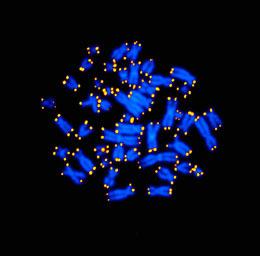 Protecting chromosome tips doesn’t just prevent ageing. It can reverse it.Peter Lansdorp/Visuals Unlimited/Corbis
Premature ageing can be reversed by reactivating an enzyme that protects the tips of chromosomes, a study in mice suggests.
Mice engineered to lack the enzyme, called telomerase, become prematurely decrepit. But they bounced back to health when the enzyme was replaced. The finding, published online today inNature1, hints that some disorders characterized by early ageing could be treated by boosting telomerase activity.
It also offers the possibility that normal human ageing could be slowed by reawakening the enzyme in cells where it has stopped working, says Ronald DePinho, a cancer geneticist at the Dana-Farber Cancer Institute and Harvard Medical School in Boston, Massachusetts, who led the new study. “This has implications for thinking about telomerase as a serious anti-ageing intervention.”
Other scientists, however, point out that mice lacking telomerase are a poor stand-in for the normal ageing process. Moreover, ramping up telomerase in humans could potentially encourage the growth of tumours.
Prostate Health Version 1.0

Estradiol

Estriol

Estrone

DHT
Due to our polluted environment, virtually all older men have enlarged prostates. This can be caused by infection, but even after all infections are eliminated with frequencies, DHT and estrogens will cause enlargement.
Frequencies can be found for these chemical compounds using their chemical structures from the Wikipedia images above. Running these frequencies will cause a breakdown of these chemicals and excretion of them from the body.
Dr. Sears has a good summary of these issues with interesting data developed from treating professional athletes. Click here for more info …
Frequencies for estradiol, estriol, estrone, and DHT are posted on the subscribers web site.
Are Genetically Engineered Mosquitoes the Answer to Quell Dengue Fever?

Australian research scientists have developed a strategy for fighting Dengue fever, a viral disease spread by mosquitoes that affects more than 50 million people annually and causes fever and crippling joint and muscle pain—and in some cases even death.Dengue kills FAR more people worldwide than influenza, yet it is rarely even mentioned by Western media.A bacterium named Wolbachiapipientis naturally infects many insect species and has the ability to interfere with its host’s reproductive ability in such a way that entire populations become infected within just a few generationsi. When Wolbachia infects mosquitoes, the mosquitoes’ ability to transmit Dengue virus is almost completely blocked.Researchers are encouraged that these bacterially infected mosquitoes are safe to humans and, once set loose, are capable of spreading on their own and overtaking the wild mosquito populations that transmit disease to humans.In two northern Australian towns, between 10,000 and 20,000 of these infected mozzies were released (“mozzie” is Australian for mosquito), and wild mosquito infection rates neared 100 percent—meaning, mosquitoes that can infect humans were almost completely replaced by the ones that can’t.This approach is a change from the swarms of genetically engineered mosquitoes being bred by companies like Oxitec, a British biotechnology company that has released millions of mutant mosquitoes into the fields of unsuspecting Australians.Oxitec has found a way to genetically manipulate Aedes aegypti, the mosquito species mainly responsible for transmitting Dengue and yellow fever viruses to humans. These “frankenskeeters” represent a new and terrifying twist in potential GMO (genetically modified organisms) dangers—another product of modern science outpacing common sense when big money is thrown into the equation.
Cancer Treatment with Electromagnetic Fields Moving Into Mainstream Medicine

British Journal of Cancer (2012) 106, 241–242. doi:10.1038/bjc.2011.576 www.bjcancer.com
Published online 17 January 2012
Published online 17 January 2012
Treating cancer with amplitude-modulated electromagnetic fields: a potential paradigm shift, again?
C F Blackman
Integrated Systems Toxicology Division (B-105-03), US Environmental Protection Agency, Research Triangle Park, NC 27711, USA
Correspondence: Dr CF Blackman, E-mail: [email protected]
The Zimmerman et al (2012) study published here, coupled with the group’s two preceding papers (Barbault et al, 2009; Costa et al, 2011), identify a potential modality for treating tumours at a dramatic reduction in trauma and cost. This set of clinical and explanatory laboratory results should be understood in the context of the history of research into the biological effects of electromagnetic fields (EMFs).
The most successful clinical application is the use of EMF to initiate fusion in fractured long bones that would not otherwise heal. Pulsed fields were designed to simulate the natural piezoelectric signals generated from bones under varying stress while walking (e.g., Bassett, 1985). There are also other reports that EMF can reduce pain and stimulate wound healing after surgery.
The group’s two previous clinical reports were critical to the design of this new Zimmerman et al study. Barbault et al (2009) described how they obtained the specific frequencies for different tumour diagnoses, which are then used in the amplitude-modulated (AM)-EMF treatment of those patients to stabilise the disease beyond normal expectations. Costa et al (2011) reported surprising clinical benefits from using the specific AM-EMF signals to treat advanced hepatocellular carcinoma, stabilising the disease and even producing partial responses up to 58 months in a subset of the patients. Now Zimmerman et al have examined the growth rate of human tumour cell lines from liver and breast cancers along with normal cells from those tissues exposed to AM-EMF. Reduced growth rate was observed for tumour cells exposed to tissue-specific AM-EMF, but no change in growth rate in normal cells derived from the same tissue type, or in tumour or normal cells from the other tissue type. The growth rate inhibitory response was field-strength (SAR) and exposure-time dependent. In ancillary tests, they observed reduction in gene expression and increases in mitotic spindle dysfunction only for the AM-EMF exposure that reduced the cell growth rate.
The work of Zimmerman et al, Costa et al and Barbault et al was not done in a vacuum. More than 30 years ago, Suzanne Bawin working in Ross Adey’s lab (Bawin et al, 1975), with independent replication by my group (Blackman et al, 1979), demonstrated that biological effects could be caused by certain AM frequencies on a carrier wave but not other frequencies, similar to the current work. Subsequent reports in the 1980s by several groups continued to support and extend the initial findings (Adey, 1992; Blackman, 1992). Read more …
Phase II and III Clinical Trials Approved by FDA for Cancer Treatment with Electromagnetic Frequencies

BUSINESS OVERVIEW
The Company is focused on the commercialization of its first oncology application: treatment of advanced hepatocellular carcinoma. It has completed a phase II study, which shows a high degree of effectiveness as well as excellent tolerability, even in previously treated patients with severely impaired liver function. The company has designed a phase III registration trial, which has been approved by the FDA and will be initiated upon funding. Following successful completion of the phase III registration trial, the company expects to file for FDA approval for the treatment of advanced hepatocellular carcinoma. In 2012, the Company plans to initiate a phase II trial for the treatment of advanced breast cancer.
PRODUCT OVERVIEW
The TheraBionic technology is based on a platform technology which has been used in the treatment of several hundreds of patients enrolled in clinical studies in the US and Europe. Since 2001 the two main developers of this technology, Boris Pasche and Alexandre Barbault, have developed novel proprietary biofeedback devices and methods, which allowed for the identification of tumor-specific frequencies. In collaboration with Dr. Niels Kuster, a leader in the field of bioelectromagnetics, they have designed and filed a patent for a novel device (OncoBionic P1), which delivers electromagnetic energy with markedly higher precision. Successful completion of a feasibility study in patients with advanced cancer as well as a phase II study in patients with advanced hepatocellular carcinoma conducted at the University of São Paulo in Brazil have paved the way for the registration trial. Given this treatment’s superior tolerability and efficacy as compared with current anticancer therapie, TheraBionic is expected to rapidly become a leader first in the treatment of hepatocellular carcinoma, then in other tumor types.
TheraBionic Publications
Blackman, C.F.
Treating cancer with amplitude-modulated electromagnetic fields: a potential paradigm shift,
again?
British Journal of Cancer 2012, 106:241-241
http://www.nature.com/bjc/journal/v106/n2/full/bjc2011576a.html
Treating cancer with amplitude-modulated electromagnetic fields: a potential paradigm shift,
again?
British Journal of Cancer 2012, 106:241-241
http://www.nature.com/bjc/journal/v106/n2/full/bjc2011576a.html
Zimmerman, J., Pennison, M., Brezovich, I., Yi, N., Yang, C.T., Ramaker, R., Absher, D., Myers,
R.M., Kuster, N., Costa, F.P., Barbault, A., Pasche, B.
Cancer cell proliferation is inhibited by specific modulation frequencies
British Journal of Cancer 2012, 106:307 – 313
http://www.nature.com/bjc/journal/v106/n2/full/bjc2011523a.html
R.M., Kuster, N., Costa, F.P., Barbault, A., Pasche, B.
Cancer cell proliferation is inhibited by specific modulation frequencies
British Journal of Cancer 2012, 106:307 – 313
http://www.nature.com/bjc/journal/v106/n2/full/bjc2011523a.html
Costa, F.P., Cosme de Oliveira, A., Meirelles Jr, R., Machado, M.C.C., Zanesco, T., Surjan, R.,
Chammas, M.C., de Souza Rocha, M., Morgan, D., Cantor, A., Ivan Brezovich, Niels Kuster,
Barbault, A., Pasche, B.
Treatment of advanced hepatocellular carcinoma with very low levels of amplitude-modulated
electromagnetic fields
British Journal of Cancer 2011, 105: 640-648
PMID 21829195
http://www.nature.com/bjc/journal/v105/n5/full/bjc2011292a.html
Chammas, M.C., de Souza Rocha, M., Morgan, D., Cantor, A., Ivan Brezovich, Niels Kuster,
Barbault, A., Pasche, B.
Treatment of advanced hepatocellular carcinoma with very low levels of amplitude-modulated
electromagnetic fields
British Journal of Cancer 2011, 105: 640-648
PMID 21829195
http://www.nature.com/bjc/journal/v105/n5/full/bjc2011292a.html
Carcinogenesis: Treatment Depends on Understanding the Multistage Model

Responding to reader requests, I recently published a summary paper on my work on carcinogenesis on this site. The paper was based in part, on my Ph.D. thesis which was published (in short form) as:
The multihit model of carcinogenesis: etiologic implications for colon cancer.
Sutherland JV, Bailar JC 3rd.
J Chronic Dis. 1984;37(6):465-80.
Noting that this paper is the basis of current understanding of cancer induction, I mentioned that recent sequencing of the genome has simply given more weight to the basic hypotheses. A recently published paper replicates my previous work. In fact the coauthor was a reviewer of my earlier paper. The National Academy of Sciences provides access to full text of the article.
Multistage carcinogenesis and the incidence of colorectal cancer
E. Georg Luebeck* and Suresh H. Moolgavkar
Proceedings of the National Academy of Sciences 99:23:15095-15100, November 12, 2002
We use general multistage models to fit the age-specific incidence of colorectal cancers in the Surveillance, Epidemiology, and End Results registry, which covers 10% of the U.S. population, while simultaneously adjusting for birth cohort and calendar year effects. The incidence of colorectal cancers in the Surveillance, Epidemiology, and End Results registry is most consistent with a model positing two rare events followed by a high-frequency event in the conversion of a normal stem cell into an initiated cell that expands clonally to give rise to an adenomatous polyp. Only one more rare event appears to be necessary for malignant transformation. The two rare events involved in initiation are interpreted to represent the homozygous loss of adenomatous polyposis coli gene function. The subsequent transition of a preinitiated stem cell into an initiated cell capable of clonal expansion via symmetric division is predicted to occur with a frequency too high for a mutational event but may reflect a positional effect in colonic crypts. Our results suggest it is not necessary to invoke genomic instability to explain colorectal cancer incidence rates in human populations. Temporal trends in the incidence of colon cancer appear to be dominated by calendar year effects. The model also predicts that interventions, such as administration of nonsteroidal anti-inflammatory drugs, designed to decrease the growth rate of adenomatous polyps, are very efficient at lowering colon cancer risk substantially, even when begun later in life. By contrast, interventions that decrease the rate of mutations at the adenomatous polyposis coli locus are much less effective in reducing the risk of colon cancer.
The Real Cost of Dental Mercury

Concorde East/West Spri – May 2012
Executive summary
While its use has essentially been eliminated in many countries, dental amalgam is now being considered for a global phase-out in the ongoing mercury treaty negotiations and in the European Union (BIO 2012) because of significant environmental concerns. The negative effects of mercury releases related to amalgam use are widely recognized in countries where its use has been prevalent: it is often the largest source of mercury in municipal wastewater as well as an increasing source of mercury air pollution from crematoria. On the other hand, high-quality mercury-free alternatives have long been available. While most dental professionals charge lower prices for amalgam fillings than for mercury-free alternatives, this paper shows that when factoring in “external” environmental and societal costs, amalgam is a higher-priced dental material by far (Hylander and Goodsite 2006). Ultimately, society pays for mercury releases related to amalgam use through additional pollution control costs, the loss of common (public-owned) resources, and the health effects associated with mercury releases and contamination (MPP 2008).
According to the United Nations Environment Programme, the use of mercury in tooth fillings represents some 10% of global mercury consumption, thus being among the largest consumer uses of mercury in the world (AMAP/UNEP 2008). In the U.S., as demonstrated in this report, mercury use in dentistry amounts to over 32 tons annually, which is considerably more than some recent estimates. For comparison, in the European Union dental applications comprise the second largest use of mercury, amounting to some 20-25% of the annual consumption of mercury in the EU. With something less than twice the population of the U.S., the EU use of mercury in dentistry is somewhat more than twice the U.S. consumption (BIO 2012).
Vitamin D: You need more than you think!
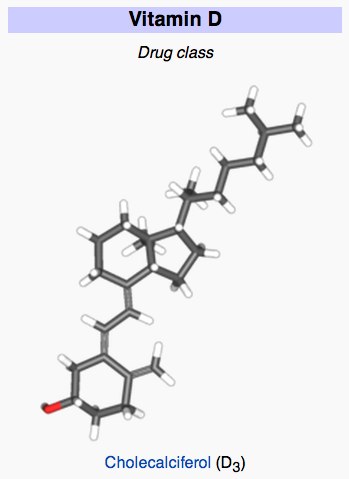
Recently at the Frontier Medical Insitute, my Vitamin D levels were determined to be low, despite taking 5000 units of Vitamin D3 once or twice a day. You need more than you think.
In addition, I no longer use sun screen in order to maximize Vitamin D creation, since frequencies can eliminate basal cell carcinomas and prevent them by eliminating precursor cells. Still, my Vitamin D was low. This problem is now part of mainstream medicine as even conventional physicians treating some family members are checking Vitamin D and prescribing it as needed.
Recent papers in the Journal of Leukocyte Biology describes the mechanisms by which low Vitamin D increases risk of infection.
Vitamin D levels diminish with age, increasing risk for colds and influenza – Naturalnews.com 14 Jun 2012
To perform the analysis and gather data for this study, researchers compared the changes in the blood levels of vitamin D among three groups of healthy subjects: youth (aged 20 to 30), middle-aged (aged 31 to 59), and elderly (aged 60 to 86). The scientists found decreased levels of vitamin D with aging, likely due to decreased exposure to the sun and a decline in the native ability of skin receptors to produce precursor levels of vitamin D, commonly found among individuals above the age of 40.
The research team found that the level of circulating vitamin D in the blood affected the toll-like receptor (TLR) expression measured on white blood cell lymphocytes and monocytes. Specifically, they found that the TRL most affected by a vitamin D insufficiency is TLR7, which regulates the immune response against viruses. In many geographic regions, limited sun exposure during darker winter months is closely associated with vitamin D deficiency and increased risk for colds and influenza outbreaks.
The lead study author, Dr. John Wherry concluded“This study shows that sunlight, or more precisely the lack of vitamin D could have a role in the seasonally higher rates of infection… since vitamin D supplements are inexpensive and generally safe, this is a really exciting discovery.”It is best not to rely on sun exposure or dietary sources to obtain vitamin D. Most health-minded adults will want to supplement with an oil-based form of Vitamin D3 (experts recommend starting with 5000 IU per day), and test twice a year using the 25(OH)D blood test to confirm optimal levels above 50 ng/mL to achieve optimal protection against colds, flu, and many viral infection strains.
Learn more:http://www.naturalnews.com/036168_vitamin_D_flu_infections.html#ixzz1xkZqnioP