Table of Contents
- A Different Approach to Alzheimer’s
- Understanding Alzheimer’s Disease
- The Science of 40 Hz Gamma Stimulation
- Frequency Therapy for Alzheimer’s: How It Works
- Risk Factors and Hidden Causes
- Nutritional Strategies That Reduce Alzheimer’s Risk
- The Chronic Infection Connection
- Related Conditions and the Bigger Picture
- What a Consultation Looks Like
- Frequently Asked Questions
- Take the Next Step
1. A Different Approach to Alzheimer’s
Alzheimer’s frequency therapy is changing the way families and practitioners approach one of the most devastating diseases of our time. Alzheimer’s disease affects more than 55 million people worldwide, and that number is growing every year. For most families, a diagnosis brings a sense of helplessness because conventional medicine offers limited options that manage symptoms rather than address root causes.
At the Frequency Research Foundation, we’ve spent decades researching a fundamentally different approach. Under the leadership of Jeff Sutherland, our work explores how specific electromagnetic frequencies can support brain health, address underlying triggers of neurodegeneration, and offer new possibilities for people living with Alzheimer’s and their families.
This guide brings together everything we’ve published on Alzheimer’s disease — the science, the risk factors, the nutritional research, and the frequency protocols — into one comprehensive resource. Whether you’re a caregiver, someone recently diagnosed, a health practitioner, or simply someone who wants to understand what’s possible beyond conventional treatment, this page is your starting point.
Navigating Alzheimer’s for yourself or a loved one? Dr. Jeff Sutherland offers personalized frequency consultations to discuss your specific situation.
2. Understanding Alzheimer’s Disease
Alzheimer’s is the most common form of dementia, characterized by progressive memory loss, cognitive decline, and changes in behavior. While mainstream research has focused heavily on amyloid plaques and tau tangles, emerging science is revealing a far more complex picture — one that includes chronic infections, environmental toxins, chronic inflammation, and disrupted brain wave patterns.
This complexity is exactly why a multi-faceted approach matters. No single intervention addresses every contributor. Our research at the Frequency Research Foundation examines how frequency-based therapies can work alongside nutritional and lifestyle strategies to support the brain from multiple angles.
3. The Science of 40 Hz Gamma Stimulation
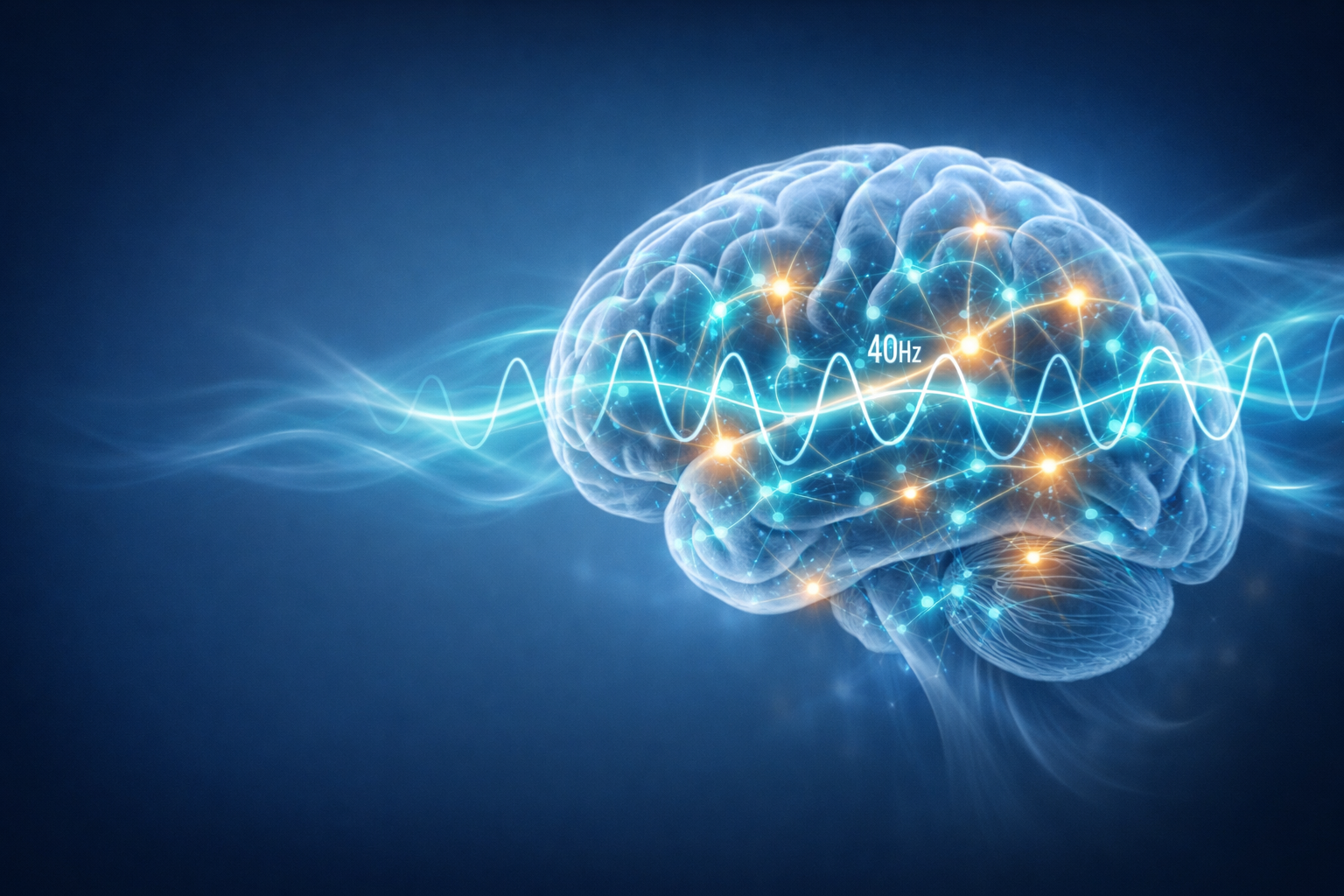
One of the most promising areas of Alzheimer’s research in recent years involves gamma brain waves — specifically, the 40 Hz frequency. Healthy brains produce gamma oscillations naturally during focused attention and memory processing. In Alzheimer’s patients, these oscillations are significantly diminished.
Groundbreaking research from MIT has demonstrated that external 40 Hz stimulation — delivered through light, sound, or electromagnetic frequencies — can reduce amyloid plaques, decrease tau phosphorylation, and activate the brain’s immune cells (microglia) to clear toxic proteins.
Our detailed analysis of this research is available in two key articles:
- 40 Hz Gamma Stimulation for Alzheimer’s: What the Evidence Shows — A thorough review of the clinical and preclinical evidence supporting gamma entrainment therapy.
- 40Hz Alzheimer’s Therapy: Sound & Light Hope for Brain Health — How sound and light-based 40 Hz therapies are being applied and what results are being observed.
The implications are significant: if the brain’s own healing mechanisms can be reactivated through the right frequencies, the potential for slowing or even partially reversing cognitive decline becomes a real conversation — not just a hope.
We’ve been working with gamma frequency protocols for years. Our article Alzheimers – Replacing the Missing Gamma Frequency explains our specific approach to restoring this critical brain rhythm using frequency therapy.
4. Frequency Therapy for Alzheimer’s: How It Works
Frequency therapy operates on the principle that biological systems respond to specific electromagnetic signals. Just as 40 Hz gamma waves can stimulate the brain’s cleanup mechanisms, other targeted frequencies may address the underlying infections, inflammation, and cellular dysfunction that contribute to Alzheimer’s progression.
At the Frequency Research Foundation, Jeff Sutherland has developed and refined frequency sets specifically for Alzheimer’s disease. Our flagship protocol, Alzheimer’s Disease – Version 2.0, represents years of research and clinical refinement.
The evidence that frequencies can make a meaningful difference is documented in Frequencies Help Alzheimer’s, which details observed improvements and the rationale behind specific frequency selections.
Our related work on COVID-19 Vaccine Contaminants and Protein Disruptor Frequencies Version 11 also intersects with Alzheimer’s research, as protein disruption and misfolding are central mechanisms in neurodegenerative disease.
Book a consultation with Dr. Jeff Sutherland to discuss a personalized frequency protocol for your situation.
5. Risk Factors and Hidden Causes
Alzheimer’s is not caused by a single factor. Research increasingly points to a web of contributing causes — many of which are overlooked in conventional care.
Environmental Toxins
Glyphosate, the active ingredient in Roundup, has been linked to neurotoxicity and blood-brain barrier disruption. Our investigation into this connection, Glyphosate Alzheimer’s Disease: Could This Common Herbicide Increase Your Risk?, reviews the evidence linking widespread herbicide exposure to increased Alzheimer’s incidence.
The aluminum connection deserves attention as well. Our article Geoengineering – Nano Aluminum Creates Chronic Parasite Infections in Populations examines how environmental aluminum exposure may contribute to both chronic infections and neurodegenerative conditions. The link between aluminum and Alzheimer’s has been debated for decades, but the evidence continues to accumulate.
For broader context on how environmental chemicals affect the nervous system, Roundup Connection to Autism explores parallel neurotoxic pathways.
Infectious Causes
One of the most compelling — and underreported — areas of Alzheimer’s research involves chronic infections. The herpes simplex virus (HSV-1) has been found in a significantly higher proportion of Alzheimer’s brains compared to controls. Our article Alzheimer’s and Herpes Simplex Virus explores this connection and what it means for treatment approaches, including frequency-based antiviral protocols.
Cardiovascular and Metabolic Links
Elevated homocysteine levels are an independent risk factor for both heart disease and Alzheimer’s. Homocysteine, Heart Disease, and Alzheimer Disease explains this biomarker and what can be done to manage it.
Genetic and Chromosomal Factors
Recent research has uncovered a surprising risk factor for men: the loss of the Y chromosome in blood cells (mosaic loss of Y, or mLOY). Our article Vanishing Y Chromosome: How mLOY Impacts Men’s Health covers how this phenomenon is linked to increased Alzheimer’s risk and shorter lifespan in men.
6. Nutritional Strategies That Reduce Alzheimer’s Risk
Nutrition provides critical support at the biochemical level while frequency therapy works at the electromagnetic level. The research on diet and Alzheimer’s prevention is remarkably strong. These are strategies that anyone can begin implementing today.
Fish and Omega-3 Fatty Acids
The data on fish consumption and Alzheimer’s prevention is striking. A 60% reduction in risk from eating fish just once a week has been documented in major studies. We’ve covered this from two angles:
- Alzheimer’s Disease: 60% Reduction in Risk From Eating Fish Once a Week! — The epidemiological evidence.
- Fish Oil Prevents 60% of Alzheimer’s Disease — The mechanism behind omega-3’s neuroprotective effects.
Red Wine and Resveratrol
Studies show that moderate red wine consumption reduces Alzheimer’s risk by 45%. This benefit likely stems from resveratrol and other polyphenolic compounds. Red Wine Cuts Alzheimer’s Risk by 45% examines this research.
Anti-Inflammatory Nutrition
Chronic neuroinflammation is a hallmark of Alzheimer’s. Managing inflammation through nutrition is one of the most accessible interventions available:
- Eliminating Inflammation Is a Top Priority for Disease Prevention — Why inflammation is the master switch in chronic disease, including Alzheimer’s.
- Take Olive Oil Instead of Ibuprofen — How oleocanthal in extra virgin olive oil acts as a natural anti-inflammatory comparable to pharmaceutical options.
- Vitamin C Supplements Lower C-Reactive Protein Levels — A simple supplementation strategy for reducing a key inflammatory biomarker linked to Alzheimer’s risk.
Want a comprehensive approach that combines Alzheimer’s frequency therapy with nutritional guidance? A consultation can address the full picture.
7. The Chronic Infection Connection
A growing body of research connects chronic, low-grade infections to neurodegenerative disease. Specifically, a chronically active immune system — struggling to clear persistent infections — triggers inflammation that damages brain tissue over time.
Mycoplasma and Brain Health
Mycoplasma infections are among the most underdiagnosed chronic infections. They can cross the blood-brain barrier and contribute to ongoing neuroinflammation that accelerates cognitive decline. Our research on mycoplasma is extensive:
- Mycoplasma Pneumoniae and Other Mycoplasmas — An overview of mycoplasma species and their systemic effects.
- Mycoplasma – Why the Lyme Flu Goes On and On — How mycoplasma infections persist and drive chronic symptoms.
- Mycoplasma: A Key Component in Lyme and Other Diseases — The role of mycoplasma as a co-infection that complicates recovery.
Lyme Disease and Neurodegeneration
Lyme disease, particularly in its chronic form, is associated with significant cognitive impairment. Many patients describe this as “Lyme brain.” The spirochete bacteria can directly invade brain tissue and trigger immune responses that damage neurons. Our Lyme research provides important context for anyone dealing with both cognitive decline and tick-borne illness:
- Update: Lyme Frequencies Version 11.0 — Our latest frequency protocol for Lyme disease.
- Recent Research on Lyme Disease — Current findings on Lyme’s systemic effects.
- Cause, Spread, and Therapy of Lyme Disease — A comprehensive overview of Lyme from cause to treatment.
Protomyxzoa and Novel Pathogens
Emerging pathogens like Protomyxzoa rheumatica may play a role in chronic illness that overlaps with neurodegenerative conditions. Combatting Protomyxzoa Rheumatica: Insights and Innovations explores frequency-based approaches to these organisms and their potential connection to brain health.
8. Related Conditions and the Bigger Picture
Alzheimer’s disease does not exist in isolation. It intersects with aging, environmental health, stress, and the broader evolution of medicine. Understanding these connections helps build a more complete picture of what drives neurodegeneration and what can be done about it.
Aging and Cognitive Decline
Can We Reverse Aging? Science Says Yes—Here’s How examines the latest research on biological age reversal. If we can slow or reverse aging at the cellular level, the impact on Alzheimer’s progression could be profound. This is an area where frequency therapy and longevity science converge.
The COVID-19 pandemic appears to have accelerated biological aging in many people. This has direct implications for cognitive health and Alzheimer’s risk. COVID Accelerated Aging Solutions: Reversing Pandemic’s Hidden Impacts discusses frequency-based approaches to this emerging challenge.
Stress and Cognitive Decline
Chronic stress is a well-established contributor to cognitive decline and can worsen outcomes for anyone pursuing Alzheimer’s frequency therapy. The cortisol-driven damage to the hippocampus — the brain’s memory center — is documented extensively in the scientific literature. Stress Equals Illness: Better Do Something About It covers the mechanisms and and practical steps for intervention.
The Future of Frequency Medicine
Frequency-based approaches to health are moving from the margins into mainstream awareness. This shift matters for Alzheimer’s patients and their families because it means more research, more validation, and more accessibility.
- EMF Health Innovations: Transforming Wellness – Technological advances driving the field forward.
- WIRED: What Tomorrow Holds – Major technology publications covering the future of frequency medicine.
Dealing with Alzheimer’s alongside Lyme, chronic infections, or post-COVID symptoms? A consultation with Dr. Jeff Sutherland can address the full picture and identify the right frequency protocols for your situation.
9. What a Consultation Looks Like
A paid consultation with Dr. Jeff Sutherland is a focused, personalized session. Your specific situation is assessed and a tailored Alzheimer’s frequency therapy protocol is discussed. Dr. Jeff Sutherland draws on decades of research and thousands of frequency sets to identify the approach most relevant to your case.
What to Expect During Your Consultation
Your session will include a review of your health history and current concerns related to Alzheimer’s or cognitive decline. Dr. Jeff Sutherland will discuss relevant frequency protocols, including the Alzheimer’s Disease Version 2.0 frequency set. He also provides guidance on complementary nutritional and lifestyle strategies that support the frequency work. You will leave with a clear next-steps plan tailored to your individual situation.
Who Should Book a Consultation
Consultations are designed for a wide range of people. Individuals diagnosed with Alzheimer’s or mild cognitive impairment benefit from personalized protocol guidance. Caregivers and family members exploring options for a loved one gain clarity on what frequency therapy can offer. Health practitioners interested in integrating frequency therapy into their practice find consultations valuable for professional development. Anyone experiencing cognitive decline who wants a comprehensive, multi-angle approach is welcome.
10. Frequently Asked Questions
11. Take the Next Step
Every case of Alzheimer’s is unique. The combination of risk factors, contributing infections, nutritional status, and individual biology means that no two people need exactly the same approach. A one-size-fits-all strategy does not work for a disease this complex.
Jeff Sutherland has spent decades developing and refining frequency protocols for neurodegenerative conditions, including Alzheimer’s disease. He has worked with thousands of frequency sets and continues to update protocols as new research emerges. A paid consultation is the most direct way to explore what Alzheimer’s frequency therapy can offer for your specific situation.
Whether you are seeking Alzheimer’s frequency therapy guidance for yourself, a family member, or a patient, the conversation starts with a single step.
© Frequency Research Foundation. This content is for educational and informational purposes. It is not intended to diagnose, treat, cure, or prevent any disease. Always consult with qualified healthcare professionals regarding medical conditions.